
The jewellery traditions most associated with colonial Southeast Asia didn't emerge fully formed. They were assembled — from indigenous goldsmithing, European court proportion, and the ornamental vocabularies carried across monsoon seas by Arab, Indian, and Chinese traders long before the port cities had names for what they were becoming.
The Gilded Straits works in that pre-codified moment.
The collection draws a deliberate line between the Russian imperial ateliers of the late 19th century — Fabergé, Bolin, Hahn, Sazikov, Ovchinnikov, Khlebnikov — and the hybrid craft traditions developing simultaneously in Southeast Asia's port cities. What those ateliers introduced to European court jewellery was not more opulence, but more precision: structural lightness, technical finesse, the replacement of brute weight with engineered form. That shift reached the Straits through colonial circulation — in the salons, the commissions, the heirlooms that moved between empires.
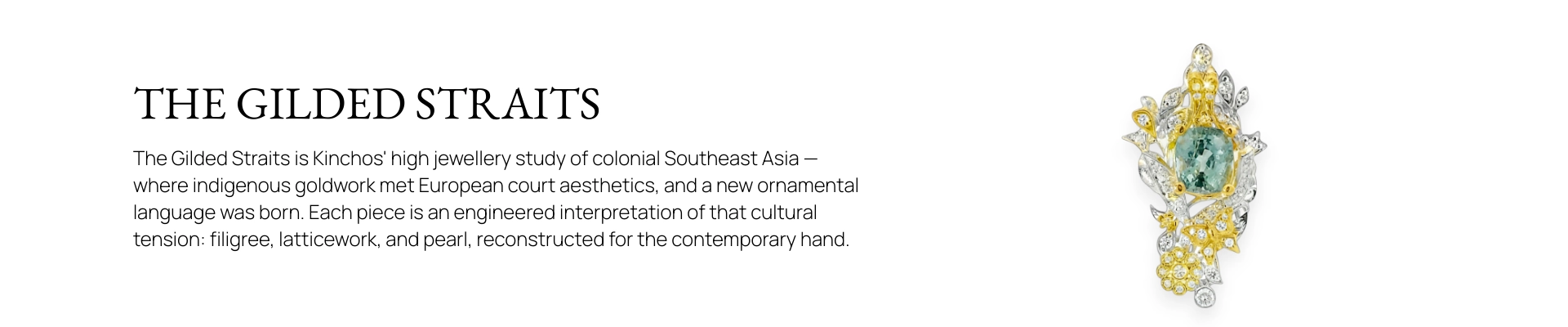
The pieces here reflect that contact: gold filigree derived from kerongsang and belt buckle forms, latticework that echoes both ventilation screens and imperial court detailing, pearls positioned not as regional signifiers but as deliberate references to European regalia. None of it belongs to one tradition. All of it is legible.
This is not recreation. It's the missing evolutionary stage — the jewellery that would have existed if the history had been documented as carefully as it was lived.
-
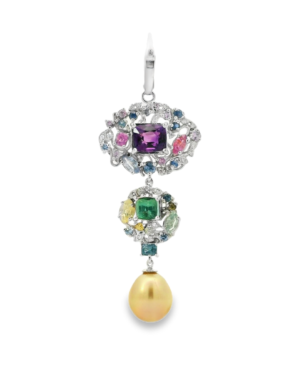
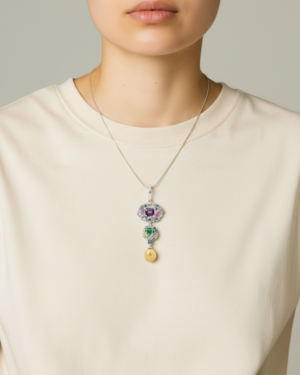
The Gilded Straits – Rintik
$10,920.00 -
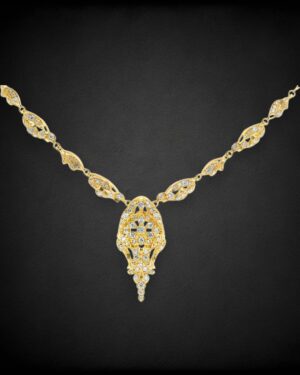

The Gilded Straits – Lencana Embun
$9,900.00 -
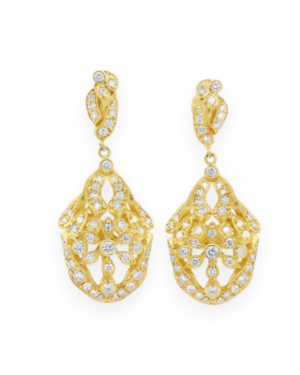

The Gilded Straits – Titisan Embun
$7,000.00 -
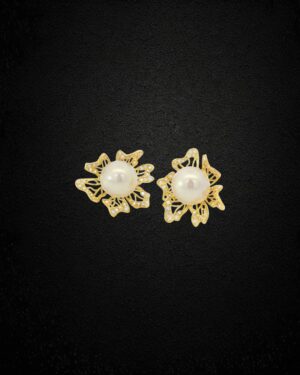

The Gilded Straits – Selubang Mutiara
$7,000.00 -
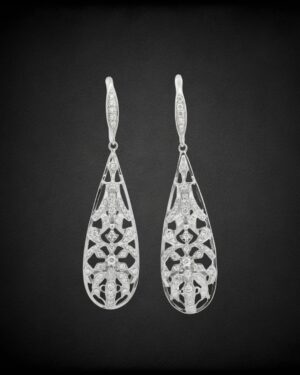

The Gilded Straits – Jendela Cahaya
$8,900.00 -
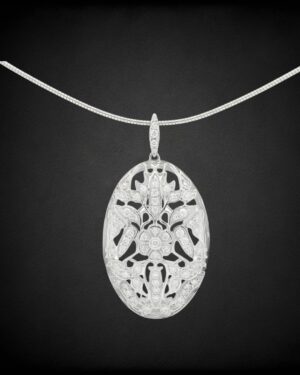
The Gilded Straits – Pintu Cahaya
$8,200.00 -
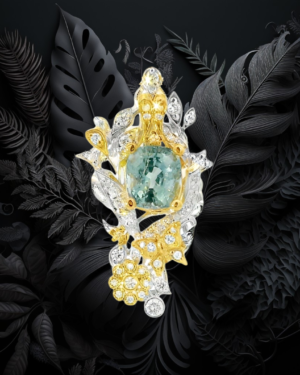
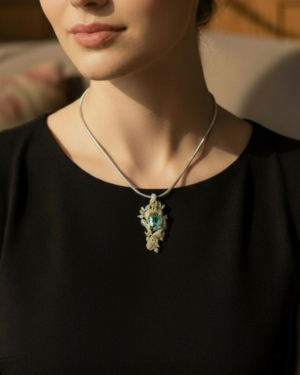
The Gilded Straits – Laut Berkilau
$9,500.00 -
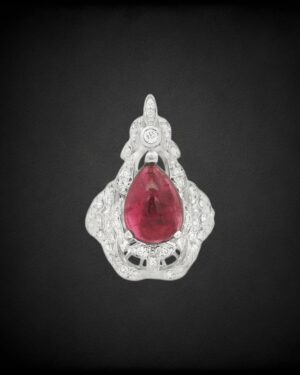

The Gilded Straits – Permata Fajar
$7,500.00